

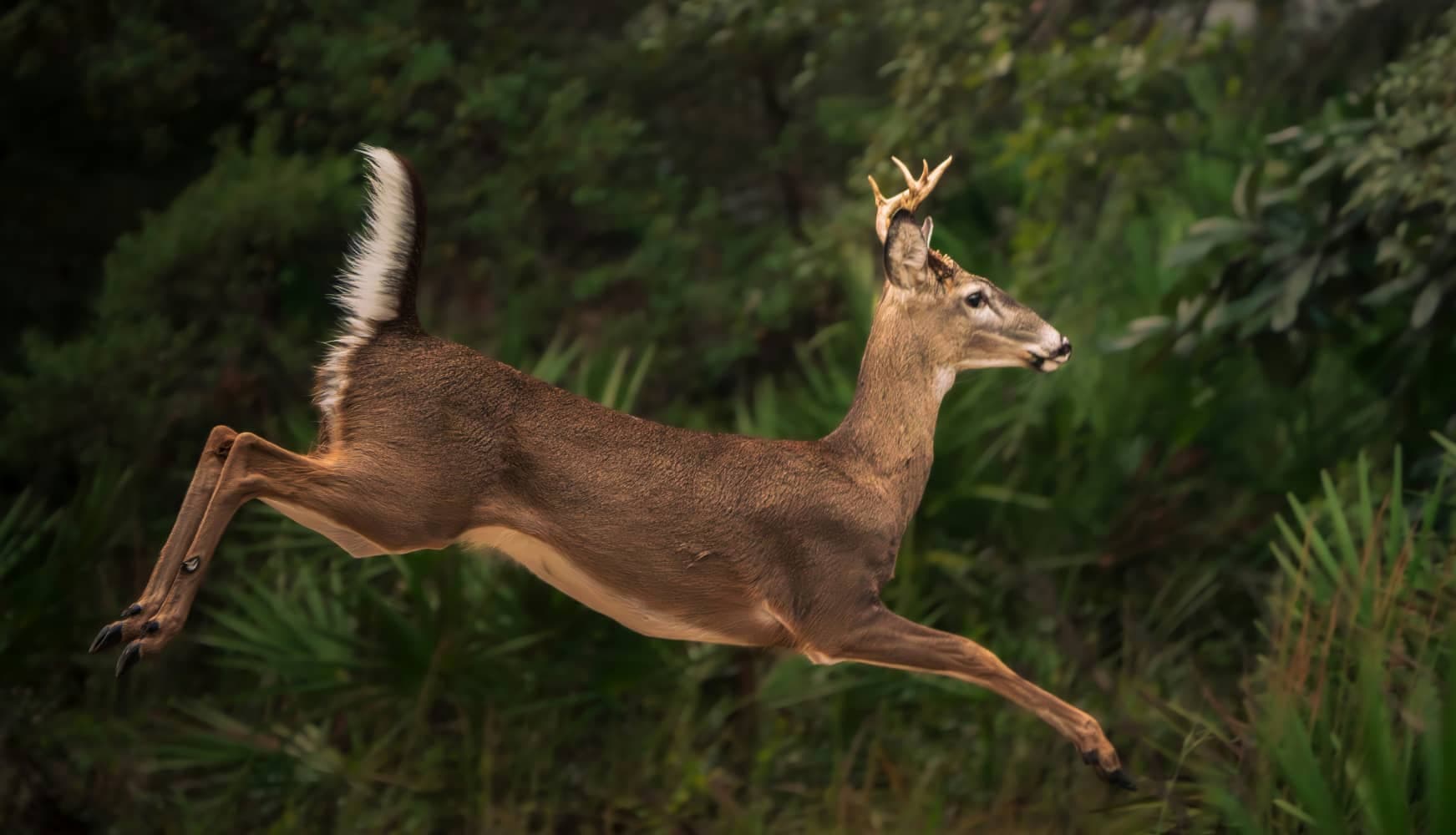
You’ve been watching a mature buck all summer. Your trail cameras have captured him repeatedly, sometimes during daylight. You know where he’s feeding, where he’s traveling, and maybe even where he’s bedding. Then September arrives—and he’s gone. You’re left wondering why bucks disappear in September.
Why do bucks disappear in September?
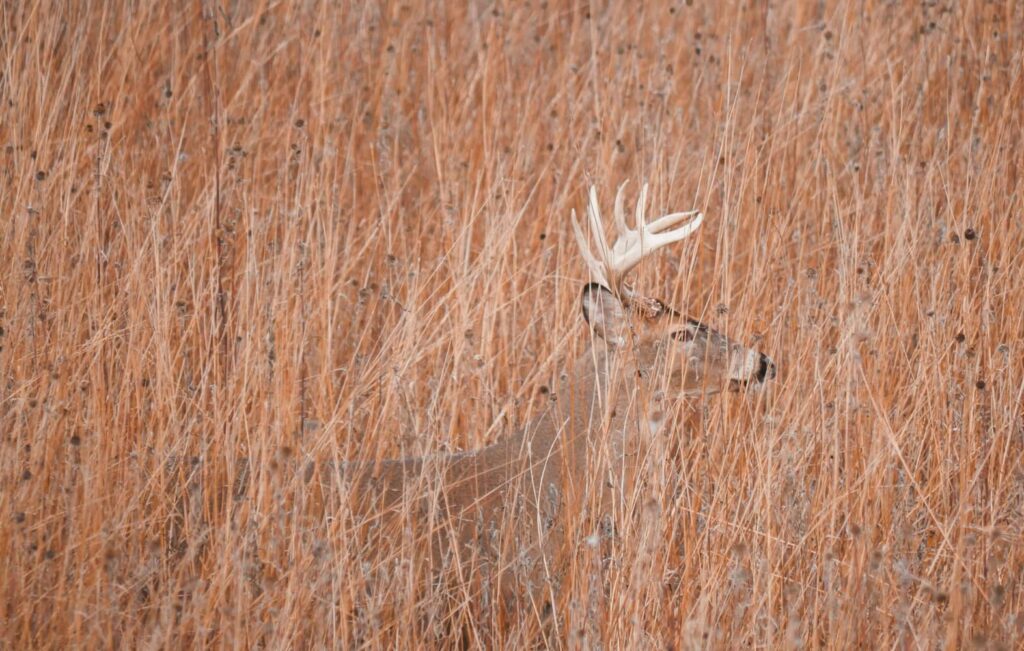
In most cases, the buck hasn’t simply vanished. The transition from summer to early fall can change a whitetail’s food sources, bedding areas, travel routes, and daily movement patterns. Mature bucks can become harder to pattern as they transition from their summer routines into their fall patterns.
Understanding these changes is critical for September deer hunting and early-season whitetail success.
Why Bucks Change Their Patterns in September
Summer is one of the easiest times of year to observe and pattern a buck. Bucks often spend much of the summer in relatively predictable areas with abundant food and security cover.
As September approaches, however, several factors begin changing at the same time.
1. Bucks Shed Velvet
The transition from velvet to hard antlers coincides with a broader seasonal change in buck behavior. As bucks move toward their fall routines, bachelor groups begin breaking up and individual bucks may change their travel patterns.
That means the buck you’ve been photographing all summer may no longer use the same routes or spend as much time in the same areas.
Recent early-season hunting guidance emphasizes that bucks can change patterns around the time they shed velvet, particularly as they transition toward new areas and food sources. For hunters, this means a summer trail camera pattern should be treated as valuable information—but not necessarily a permanent blueprint.
2. Food Sources Begin Changing
One of the biggest drivers of September deer movement is food.
Summer food sources can include agricultural crops, clover, green vegetation, and other high-quality forage. As fall approaches, crops mature, agricultural fields may be harvested, and mast-producing trees begin to become more important.
These changes can redirect deer movement almost overnight.
A buck hasn’t necessarily left your property. He may simply be using a different food source.
This is why hunters should monitor both deer activity and changing habitat conditions rather than assuming the same feeding pattern will continue throughout the fall.
3. Bucks May Change Bedding Areas
Food isn’t the only factor that changes.
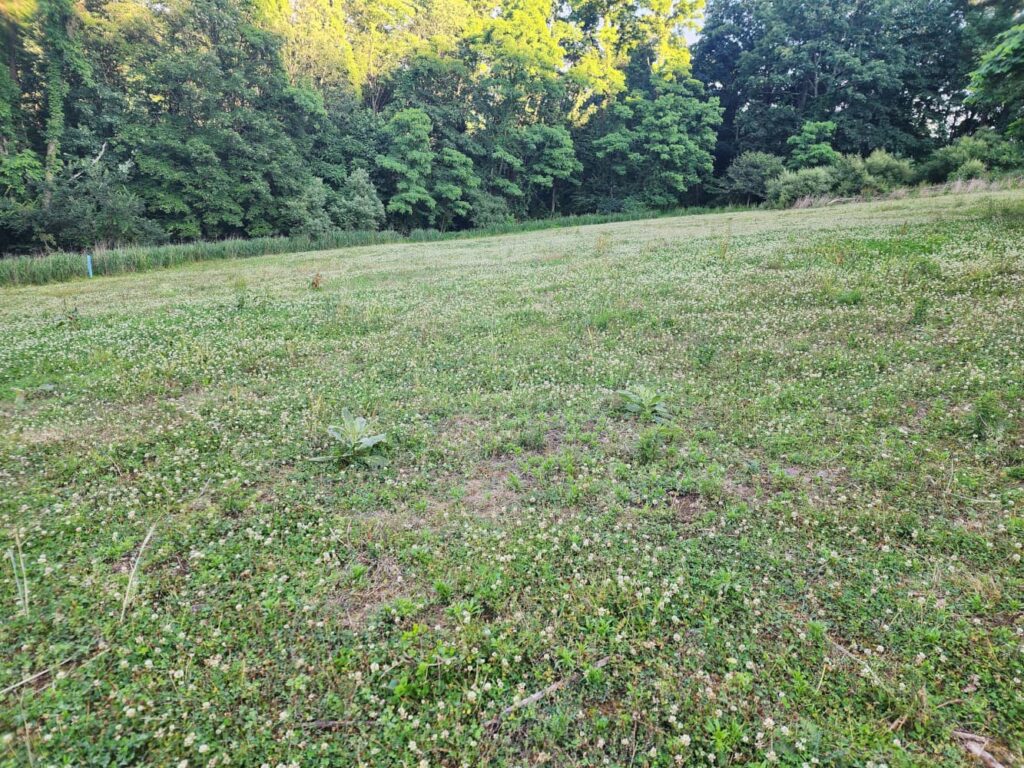
A mature buck’s bedding location is closely connected to security. As vegetation changes and summer conditions transition into fall, bucks may shift where they spend daylight hours.
This can make a familiar buck seem to disappear from your trail cameras.
If your cameras are positioned around summer feeding areas, you may continue getting plenty of doe and fawn pictures while your target buck becomes noticeably absent.
That doesn’t necessarily mean he left. It may mean his daytime core area has changed.
4. Hunting Pressure Changes Deer Behavior
Even limited human activity can affect how mature bucks use an area.
Scouting, checking trail cameras, hanging stands, walking through bedding areas, and repeated access to a property all introduce pressure. Once hunting season begins, that pressure generally increases.
Early-season deer hunting offers an important advantage because bucks have not yet experienced significant hunting pressure. Maintaining that advantage requires careful access and minimal disturbance.
This is particularly important when hunting mature bucks. If you’ve identified a target buck in August, the goal isn’t necessarily to spend more time looking for him. Sometimes the better strategy is to reduce your presence and let the data come to you.
5. Summer Patterns Aren’t Fall Patterns
This is perhaps the biggest mistake hunters make when interpreting trail camera information.
A summer pattern tells you where a buck has been. It doesn’t guarantee where he’ll be in October or November.
Instead of asking, “Why did my buck leave?” ask, “What changed?“
Look at:
- Food sources
- Bedding areas
- Deer trails
- Wind direction
- Weather conditions
- Hunting pressure
- Agricultural activity
- New rubs and scrapes
- Trail camera activity
These clues can help identify where the buck’s new fall pattern is developing.
How Trail Cameras Can Help Find a Missing Buck
When a mature buck disappears from one camera, resist the temptation to immediately assume he’s gone.
Start comparing your current photos with previous observations. Review your TrophyTracks journals to find patterns and likely trends to find a missing buck.
Look for changes in:
Time of day: Is the buck becoming more nocturnal?
Location: Are nearby cameras picking him up?
Direction of travel: Has he changed the route between bedding and food?
Frequency: Is he appearing less often because he’s using a different part of his range?
Other deer activity: Are does and younger bucks still using the same area?
A well-organized trail camera history can make these changes much easier to recognize.
This is one reason maintaining a digital hunting journal can be so valuable. With TrophyTracks, hunters can organize observations and hunting information in one place rather than trying to remember what happened several weeks—or several seasons—ago.
Download TrophyTracks today to start tracking your target buck.
Don’t Abandon Your Property Too Quickly
When a target buck disappears in September, many hunters immediately start searching for a completely different deer.
That can be a mistake.
The better approach is to treat the disappearance as a pattern change. Learn how to pattern a mature buck now before the season is in full swing.
Look for fresh sign. Reevaluate food sources. Check areas you may have overlooked. Compare current trail camera activity with your summer observations. Pay attention to changing weather and wind conditions.
The objective isn’t to find the exact spot where the buck was standing in August. It’s to identify where he is most likely to be now.
September Is a Transition, Not a Disappearance
The good news is that a missing September buck isn’t necessarily bad news.
Whitetails are constantly responding to changes in food, cover, weather, pressure, and seasonal behavior. Mature bucks can be particularly difficult to pattern because they are often more cautious and less tolerant of disturbance.
That’s why successful September deer hunting requires hunters to adapt.
Your August trail camera photos aren’t useless. They’re the first chapter of the story. Use them as historical data, compare them with current observations, and look for the changes that reveal a buck’s new fall pattern.
Because when a mature buck disappears in September, he probably didn’t disappear at all. Stop second-guessing your data. He changed the pattern. Your job is to figure out why.