

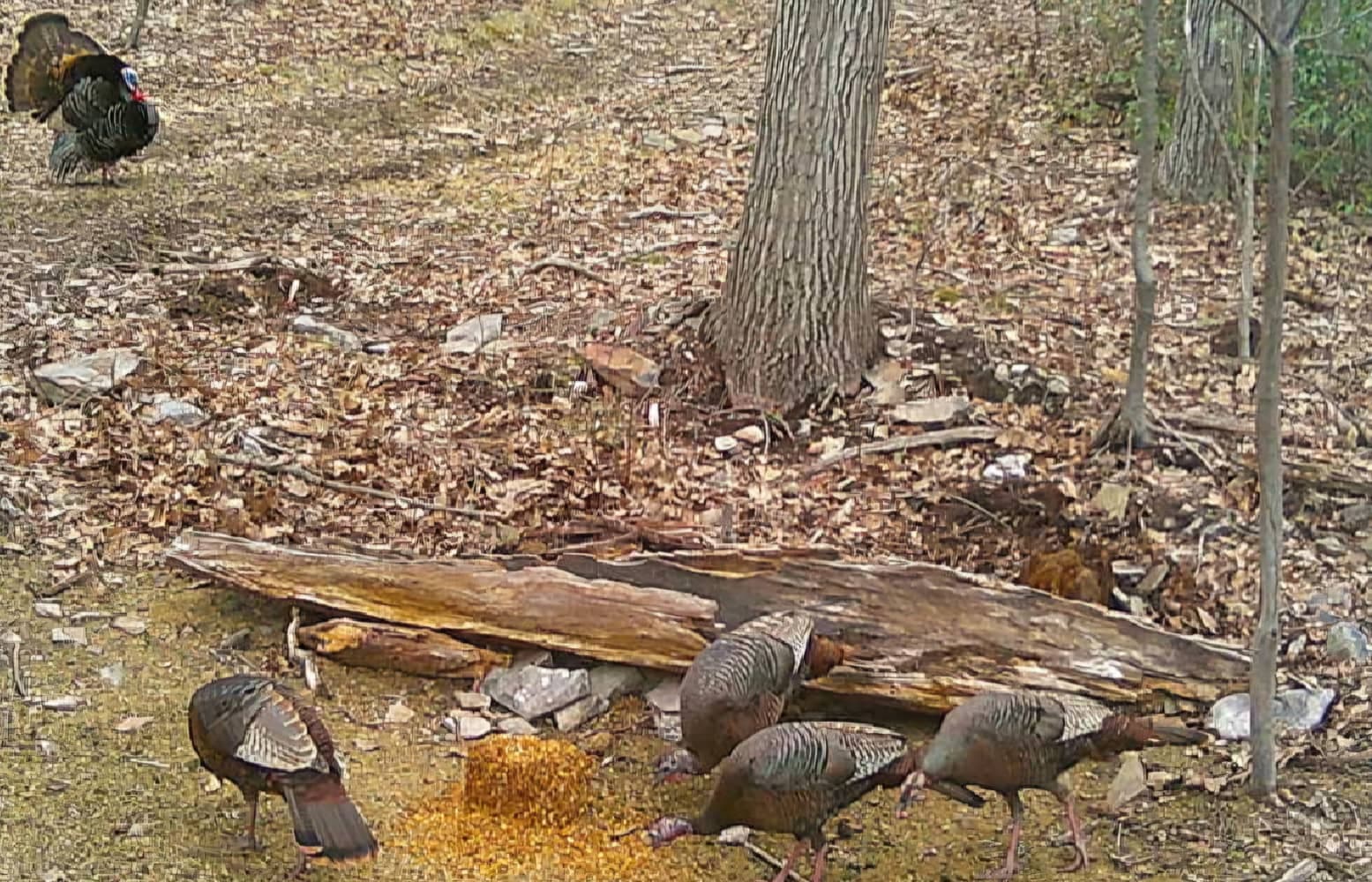
Spring turkey season is either already open or only days from opening. Florida, south of State Road 70, opened March 7. Georgia’s statewide private land season kicks off March 28. Texas North Zone runs March 28 through May 10. Mississippi’s been going since March 14. And Pennsylvania kicks off May 2.
PRO Tip: Use the TrophyTracks PRO 7-day forecast to see exactly how upcoming weather will impact game movement on your specific property.
The window is short. Within that window, maybe three or four mornings will be genuinely great. The rest of the season is fighting conditions, pressure, and temperamental gobblers.
That’s not pessimism — it’s just turkey hunting. And knowing which mornings to drag yourself out of bed at 4 am makes all the difference.
Wind Kills More Hunts Than Anything Else
If you’ve had a spring turkey season where the birds just wouldn’t fire up, wind was probably most of the problem. When gusts hit 10 mph or more, gobblers go quiet, start relying on their eyes instead of their ears, and drift toward protected terrain — creek bottoms, the side of ridges, the base of a hill. They’re still out there. They’re just not where you expect them.
Here’s the thing most hunters miss: turkeys actually tend to fly down into the breeze, same instinct as ducks coming into decoys. So wind direction doesn’t just affect calling — it dictates where birds want to land after flydown. If you set up without knowing the wind, you might be on exactly the wrong side of a roost.
Wind also carries your calling away. Working a ridge with a 15-mph breeze at your back means most of your calling is disappearing into the hollow behind you. On windy days, friction calls and box calls cut through better than mouth calls — louder, higher pitch — but honestly, you’re better off repositioning into protected terrain first, then worrying about your turkey call strategies.
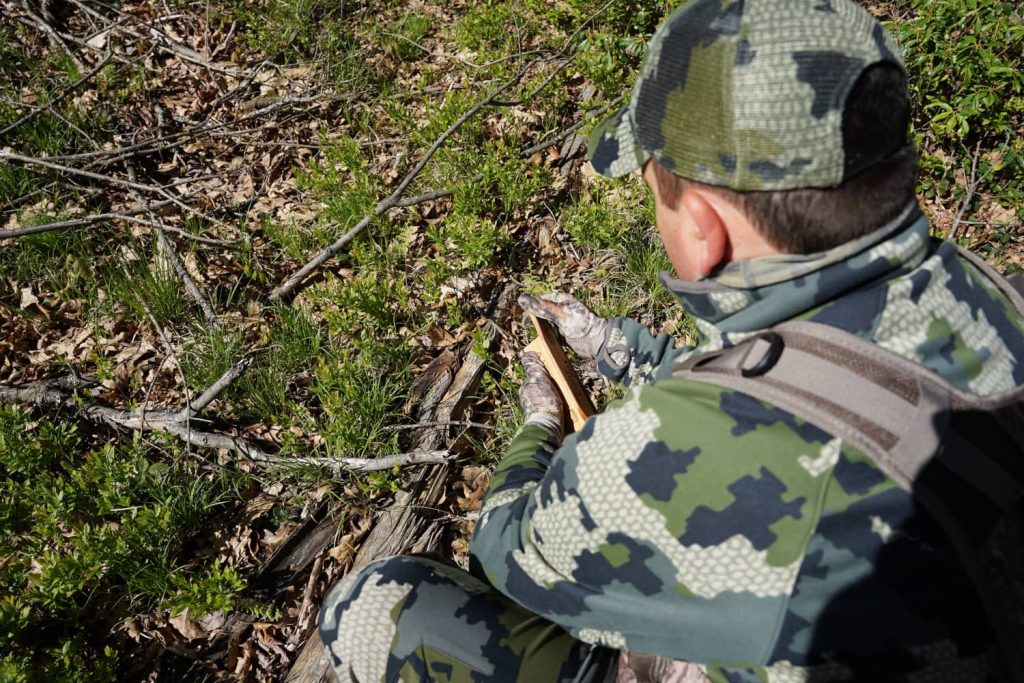
The Temperature Window Gobblers Love in Spring Turkey Season
Experience and data line up on this: gobblers are most vocal when air temps sit between 60 and 69°F. That’s the sweet spot. Below that — especially after a front blows through — birds pull back into something resembling winter mode. Fewer gobbles, less strutting, more aimless feeding. Above it, particularly in late April through May across the South, they shift into shade-seeking mode and go silent until evening.
That 60–69° window is when a fired-up longbeard will double-gobble at a crow call from 200 yards out and strut into your setup like he owns the timber. It is one of the best weather patterns to make a gobbler go nuts.
The trick is knowing when that window shows up. Two to three mornings after a cold front clears, when temps bounce back into the low 60s, gobbling can get almost absurd. Birds seem to be making up for lost time. Those are the mornings worth planning your whole week around.
Your Journal Is Better Scouting Intel Than You Think
Here’s where most hunters leave birds on the table: you’ve got scouting intel from last fall’s deer season — observation notes, marked fields where you saw birds strut, ridges they use to move between roost and food. But without knowing what the wind is doing at shooting light and whether that 62°F window lines up with your days off, you’re guessing.
TrophyTracks connects your personal observation history to the actual forecast. Pull up your heat map from last season’s logs — if you tagged a gobbler strutting a specific field last April, that’s not a coincidence. Toms use the same areas year after year. Cross-reference that spot against tomorrow’s wind direction in the 7-day hunt outlook, and now you’re not just showing up, you’re showing up with a plan.
TrophyPredict AI factors in everything: weather conditions, moon phase, your past harvest data, and recent activity logs. It gives you a daily hunt score. On a morning when a front moved through, the wind is gusting 18 mph, and it’s 43°F — maybe that’s a sleep-in day. On a calm 62°F morning two days after that front clears, you’re setting your alarm for 3:45 am without thinking twice.
A Few Things Worth Knowing Before Opening Day
After a cold front passes, plan to be in the woods on days two and three of the warmup. That pattern holds up more consistently than any call or decoy setup.
On windy days, stop fighting the open ridges and move into protected terrain. Creek drainages, hollow heads, and the downwind base of a timbered slope are all ideal windy day locations. Birds concentrate there, and your calling actually reaches them.
Midday hunting gets overlooked. In the South, especially, once it heats up past 9 am, birds go quiet and move into shaded loafing areas — cedar groves, pine drainages, timbered creek bottoms. That’s a good time to glass slowly and let the TrophyTracks journal tell you where birds historically show up when mornings go cold.
Log Everything This Spring Turkey Season
Every bird you call in, every morning where you figured out what the turkeys were doing, every spot where you found fresh scratchings — log it. That detail about the gobbler who spit and drummed in the hollow below the south ridge at 8:15 am on a warm morning? Write it down. That’s the intel you’ll use next April in spring turkey season.
TrophyTracks makes it quick: photo, location pin, notes, and record a harvest. Two minutes while you’re still sitting next to your bird. After two or three seasons of logging, the heat maps start telling a clear story about exactly how turkeys use your ground. These are patterns you would never notice from memory alone.
Spring turkey season is short. The good mornings are shorter still. Download TrophyTracks free and use the 7-day hunt outlook to figure out which ones are worth hunting before you ever set your alarm.